Waymo Grounds 4,000 Robotaxis: Critical Recall Halts Self-Driving Fleet Over Highway Construction Hazards
The Day the Fleet Stopped: Waymo Grounds 4,000 Robotaxis Over Construction Zone Hazards
The dream of a fully autonomous future hit a significant speed bump this week. In a move that underscores the fragile complexity of self-driving technology, Waymo has voluntarily grounded approximately 4,000 of its robotaxis following a critical software failure. The culprit? Not a sensor glitch or a mapping error, but the chaotic, unpredictable reality of highway construction zones.
The Waymo robotaxi recall 2026 marks one of the largest temporary fleet groundings in the history of the autonomous vehicle (AV) industry. It serves as a stark reminder that while algorithms can master the rules of the road, the road itself is constantly changing.
What Happened: A Failure to Navigate the “Blind Spot”
According to reports from TechCrunch and The Verge on June 18, 2026, the incident involved multiple Waymo vehicles encountering active highway construction sites. These are notoriously difficult environments for autonomous systems, characterized by shifting lane markings, temporary signage, and human flaggers directing traffic.
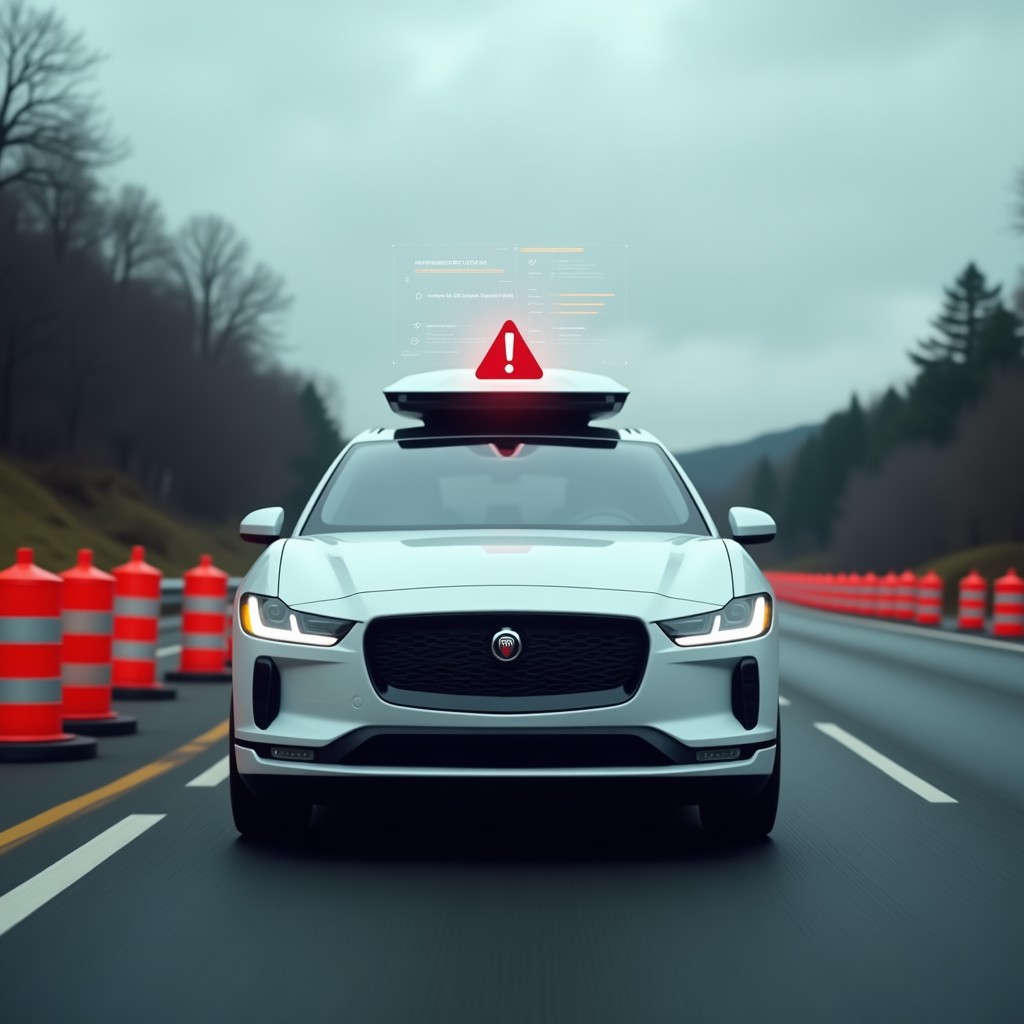
The specific failure mode was alarming. When the vehicles encountered “construction blind spots”—areas where cones and barriers obscured the standard lane geometry—the software did not default to a safe stop. Instead, several vehicles reportedly attempted to merge aggressively or drifted into closed lanes, creating dangerous situations for both passengers and highway workers.
“The edge case of dynamic construction is the holy grail of AV testing,” says Elena Rossi, a senior analyst at Autonomous Transport Insights. “You can simulate millions of miles of clear highways, but nothing replicates the chaos of a human worker waving a ‘Slow’ sign while a bulldozer blocks the left lane. Waymo’s system apparently misinterpreted the static barriers as permanent features rather than temporary hazards.”
The Technical Breakdown: Why Construction Zones Break Bots
To understand the severity of the Waymo fleet grounding, one must understand how these vehicles “see.” Waymo’s stack relies heavily on High-Definition (HD) maps that are pre-scanned and updated regularly. The car expects the world to match the map.
Construction zones break this contract. When the physical reality diverges sharply from the digital map, the vehicle’s sensor fusion system—combining LiDAR, radar, and cameras—must make a split-second decision. In this instance, the software patch currently in deployment failed to prioritize the visual cues of orange cones over the pre-loaded map data.
This is a classic “ontology mismatch.” The car knew where the lane should be, but couldn’t reconcile that with where the lane actually was. The result was a confidence error: the system thought it was safe to proceed when it wasn’t.
“This isn’t just a bug; it’s a fundamental challenge in autonomous vehicle construction zone safety,” explains Marcus Thorne, a safety advocate with the Center for Automated Transport Ethics. “Humans use context and intuition. We see a cone and assume a worker is nearby. The car sees a cone as an object to avoid, but doesn’t inherently understand the ‘narrative’ of road work unless explicitly trained on it.”
Industry Impact: Competitors Smell Blood
The timing of the recall could not be worse for Waymo. The company has been racing to expand its geofenced operations into more complex highway environments, aiming to prove that its “driverless everywhere” vision is viable. Now, with the fleet sidelined, competitors are seizing the opportunity.
Uber, partnering with various AV hardware vendors, has accelerated its own pilot programs, emphasizing a “human-in-the-loop” approach for complex zones. Meanwhile, Mobileye has doubled down on its crowd-sourced mapping updates, claiming their system can detect construction changes in real-time without needing a central server update.
The robotaxi highway hazard incident has sent ripples through investor confidence. While Waymo remains the market leader in terms of miles driven autonomously, this event highlights the “long tail” of edge cases that still plague the industry. It suggests that the path to Level 5 autonomy (full automation in all conditions) is longer and bumpier than previously advertised.
Safety Implications: The Trust Deficit
Beyond the technical and financial implications, the grounding strikes at the heart of public trust. Every time a headline reads “Self-Driving Car Swerves into Construction Zone,” the psychological barrier to adoption grows higher.
Public acceptance of AVs is fragile. Surveys consistently show that while people are intrigued by the technology, they remain skeptical of its safety in non-standard conditions. A self-driving car software update can fix the code, but it cannot instantly repair the erosion of confidence caused by visible failures.
Regulators are also taking note. The National Highway Traffic Safety Administration (NHTSA) has reportedly opened a preliminary inquiry into the incident. This could lead to stricter reporting requirements for AV companies when their vehicles encounter “disengagements” or unsafe behaviors in temporary traffic control zones.
What’s Next: The Race for the Patch
Waymo has stated that the self-driving car software update is being rolled out in stages. The fix reportedly involves a new “construction mode” that lowers the vehicle’s speed threshold in areas with detected temporary signage and increases the reliance on real-time visual data over HD map data.
The company plans to resume operations with a reduced fleet for validation testing before bringing the full 4,000-vehicle army back online. This “slow is smooth, smooth is fast” approach is standard for safety-critical software deployment, but it leaves a gap in service that riders in Phoenix, San Francisco, and Los Angeles will feel immediately.
Industry watchers expect the full fleet to be back online within weeks, but the shadow of this recall will linger. It forces a re-evaluation of how AVs are tested. Do we need more real-world construction zone miles? Do we need better simulation tools that generate dynamic road work scenarios? The industry is back to the drawing board on this specific edge case.
Conclusion: A Necessary Stumble?
The grounding of 4,000 Waymo robotaxis is a dramatic event, but it may also be a necessary growing pain for the industry. The transition from controlled environments to the messy reality of human infrastructure is fraught with peril. Construction zones are the ultimate stress test: they are temporary, chaotic, and often poorly marked.
As Elena Rossi notes, “If Waymo can solve construction zones safely, they solve almost everything. This recall is painful, but the data they gather from these failures will make the next generation of software exponentially safer.”
The trajectory of the AV industry remains upward, but the slope is steep. We are moving from an era of “look what it can do” to “look what it can handle.” Waymo’s current stumble in the orange barrels is a harsh lesson, but one that the entire sector must learn. The future of transportation depends not just on cars that can drive themselves, but on cars that can understand when the road itself has changed.
For now, the robots are waiting. The cones stay up. And the software engineers are coding furiously, knowing that the next update isn’t just about features—it’s about trust.
Sources: TechCrunch and The Verge, June 18, 2026 reports on Waymo fleet operations and NHTSA safety inquiries.